Updated 11-Jul-2026
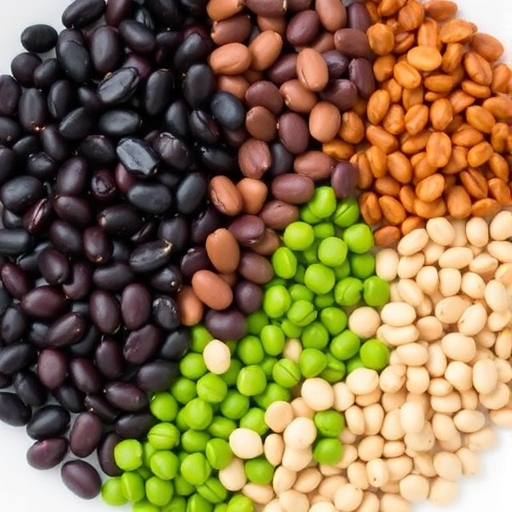
Legumes are the plant and pulses are the flower (e.g., peas to a pea pod/bean). These are an ancient source of nutrition. Apparently humans ate wild legumes for tens of thousands of years and started domesticating them between 11,000 and 10,000 years ago. Many legumes were consumed in a traditional Roman diet, and of course in many other civilzations and cultures. These are fantastic for metabolic health and are known for being slow carbs.
Our legumes of choice
Based on flavor and other factors, these are the legumes of choice in our house. They are widely available and fairly cheap, with prices around 100 baht/kg ($1.50/pound).
- Black beans
- Pinto beans
- Adzuki beans (remember to parboil for 10 minutes and discard water, then cook with fresh water)
- Green lentils
- Split green peas
- Soy beans (tofu, miso, soy milk)
Legumes comparative nutrition
Azuki beans
- Small red bean, common in East Asian sweets. High in folate, magnesium, potassium, and fiber. Good for digestion and heart health. Rich in antioxidants (proanthocyanidins). Best for digestion and weight management. Highest in resistant starch (feeds good gut bacteria) and has the fewest calories. Also rich in potassium for fluid balance and proanthocyanidins (anti-inflammatory antioxidants).
Black beans
- High in anthocyanins (antioxidants), magnesium, iron. Excellent for gut health (resistant starch), blood sugar control, and heart health. Best for blood sugar and antioxidant power. Packed with anthocyanins (same as blueberries) that fight oxidative stress. High in magnesium and resistant starch, making it top-tier for glucose control and gut microbiome diversity.
Pinto beans
- High in potassium, folate, calcium, selenium. Good for blood pressure, bone health, and heart health. Very creamy texture. Best for bone health & blood pressure. The highest in calcium (nearly double black beans), and potassium, plus selenium (supports thyroid). Great for heart health, and reducing hypertension.
Lentils
- High in iron, folate, and manganese. Excellent for heart health, blood sugar stability, and plant-based protein. Red lentils cook faster and are easier to digest. Best for iron and energy. Highest in iron and folate of this group - crucial for red blood cell production and pregnancy. Also contains molybdenum to help your body detoxify sulfites. Red lentils cook fastest and are gentlest on digestion.
Split green pea
- High in protein and fiber, specifically rich in potassium, iron, and B vitamins (B1, B9). Excellent for heart health, blood pressure, and satiety. Lower in antinutrients compared to some beans. Best for satiety & B-vitamins. Exceptionally high in thiamine (B1) and protein per calorie. Its thick soluble fiber keeps you full longer than the others and helps lower LDL (bad) cholesterol effectively.
Preparing legumes
There are basically three different approaches, one is a long soak (overnight) and the other is limited soak (1-2 hours). Also, Adzuki beans need special treatment.
- Note, for all of these preparations, include 1/4 tsp of baking soda if you have hard water (high mineral content).
Long soak
- Black beans
- Pinto beans
- Soy beans
This is an 8-hour or overnight soak. After which, discard the water, rinse the beans, then add them and fresh water back to a pot and simmer for several hours.
Short soak
- Green lentils
- Split green peas
This can be 1-2 hours, depending on how fast these legumes absorb water.
Parboil
- Adzuki beans
Adzuki beans do not benefit from any pre-soak, so simply par-boil (simmer) for 10 minutes. Then discard that water and rinse the beans. Then add fresh water to the pot and add the beans back in for longer cooking. This can take a few hours.
Blending legumes
Both the soy beans and the split green peas need to be blended, usually twice. Soy beans are cooked and blended twice in succession, then strained to produce the milk, while split green peas are cooked and blended a second time as well, with the result being a smooth soup.
Soy milk, tofu, and miso
We've never created miso, but instead order 1 kg of white miso online, which keeps for 4-6 months in the fridge. We make miso soup and miso dressing, and add it to other dishes when desired.
Tofu is made out of soy milk along with a coagulant (such as magnesium chloride/nagari), pretty much the same method as making fresh cheese from cows milk. However, these are so inexpensive in our local market (both tofu and soy milk) that it doesn't make sense from a time perspective to make these at home.
We eat tofu in miso soup and a tomato-tofu dish which is kind of like Uova in Purgatorio/Shakshuka which can still include eggs, but also has medium-soft tofu. We use hard tofu for our Pad Thai recipe.