Updated 24-Aug-2026
The 125cc equivalent electric motorbike is important because of the vast market and usefulness of these vehicles.
Note, this bike is getting close to the spec (70mph/114kph) and the price matches what an ICE 125i costs (in Thailand), about 58,000 THB.
From Europe or North America this isn't so clear as they are simply not present in the vast numbers they are in Asia.
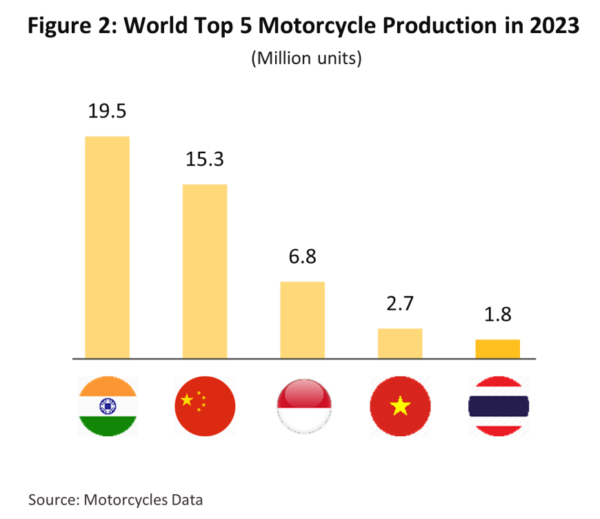
China and India alone account for the manufacture nearly 35 million new motorcycles per year, with the vast majority being commuter vs. sport models.
Indonesia, Vietnam, and Thailand add another 10 million motorcycles per year. In Thailand, Honda and Yamaha command over 90% of the market. The most famous model is the Honda Wave 125i which emerged from the Honda Cub.
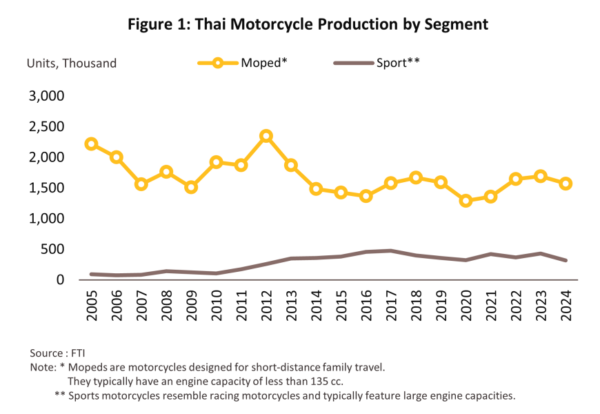
This is a step-through manual transmission motorbike capable of 110-120kph in speed, with a basket in front, enough size for 2+ people (three and four are common in Thailand and elsewhere), and a four liter gas tank typically with gasohol 91. With 50% highway/city driving it gets 100mi/gal.
Vinfast electric motorbikes in Vietnam
Note that Honda also dominated the Vietnamese marketin in motorcycles, that is until recently. My how a monopoly is invigorating. Vinfast has one in electric cars and also electric motorbikes. They recently rolled out their one millionth electric motorbike in Vietnam, and are starting exports into the Phillipines and elsewhere in Asean. The advantages they have is having developed a battery-swapping infrastructure which lowers the initial cost of the vehicle while adding a subscription fee for battery swapping. Othewise one can add the cost of batteries (one or two) and charge from home or elsewhere (basically, anywhere). However, the top speeds of the three electric motorbike models don't approach that of the ICE motorbikes, with only 60kph to 90kph depending on the model.
Range of small electric vehicles (2-3 wheels)
There is a large range of electric vehicles catching on in Thailand, most under 20,000 THB and many under 10,000 THB. These are largely the old folks vehicles. Slow in traffic (due to underpower or simply the desires of the driver). Many are only seen on the small roads of towns and villages. That is fine and it is a booming market, though the products are generally slow, ugly, and loud, and straight from China, no local manufacturing.
Back to basics and what makes the Honda Wave succeed
The Honda Wave, and related Honda Dream, and Super Cub captured the market in many countries by its hardiness, durability, performance (at pulling whatever was needed) speeds that work on thoroughfares (though some highways are off limits to motorbikes in Bangkok, most of the rest of the country is welcoming), and affordability. Honda did this with quality manufacturing at scale. To compete head-to-head with the commuter + workhorse segment (not the sport segment), an equivalent product is needed. Namely one that checks the boxes.