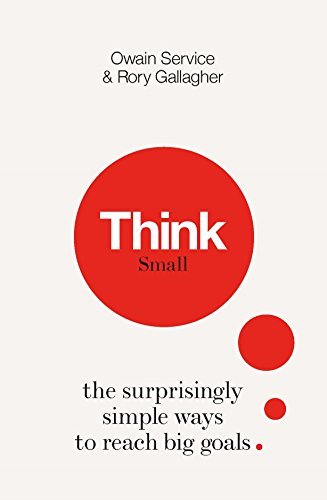
Think small by Service and Gallagher is about how to accomplish medium-to-large projects with small thinking. This came out of the Behvioural unit of the UK government. Makes sense.
I couldn't read the whole thing as it really is way too long-winded. So after reading the intro and first chapter I asked Gemini to give me a summary document.
I normally don't do this with books (as in, ever) as I greatly enjoy reading and do it daily, sometimes for hours at a time.
However, this was one of those times when the AI gave me the information I needed (though stripped of all examples) and I added my own bulleted list summary on top.
My interpretation/operationalization
- One big goal, broken into manageable parts
- Simple rules, anchored to routines
- Write it down and make it public
- Set pace and small rewards along the way
- Get help through shared goals with others
- Track progress, get actionable input
- Test, iterate, refine process
Summary of Think Small by Owain Service and Rory Gallagher
In Think Small: The Surprisingly Simple Ways to Reach Big Goals, Owain Service and Rory Gallagher apply insights from behavioural science and the UK's Nudge Unit to help individuals set and achieve personal goals. Instead of relying on big, dramatic bursts of willpower, their framework relies on creating behavioural scaffolding through seven simple steps:
1. Set
- Choose the right goal: Select a goal that actually improves your well-being (such as building relationships, learning, or health).
- Focus on a single target: Avoid setting too many objectives at once; pick one main objective and set a clear deadline.
- Break it down: Split a long-term goal into small, manageable milestone steps.
2. Plan
- Set simple rules: Establish clear, simple guidelines (or bright lines) that leave little room for ambiguity - such as No drinking on weeknights at home - reducing the mental effort required to stay on track.
- Anchor to routines: Create actionable plan triggers linking your new actions to daily routines (e.g., If [X situation happens], then I will [do Y]).
3. Commit
- Write it down and make it public: Document your commitment and share it with others to increase accountability.
- Appoint a commitment referee: Assign a trusted colleague or friend to hold you accountable to your target.
4. Reward
- Pace your incentives: Use small rewards along the way to maintain momentum, followed by a larger celebration upon reaching the ultimate goal.
- Avoid backfire effects: Ensure rewards don't turn your intrinsic motivation into a purely transactional exercise or undermine your progress.
- Enlist help: Tap into your social networks or form a group with a shared goal.
- Leverage social support: Working alongside or with the assistance of others significantly increases your likelihood of long-term success.
6. Feedback
- Track progress: Continuously monitor where you stand relative to your end goal.
- Seek actionable input: Surround yourself with people who provide constructive, specific feedback so you know if your tactics are effective.
7. Stick
- Test and iterate: Treat your habits as experiments - test small variations in your routines to see what yields the best results.
- Refine your process: Double down on strategies that consistently work, discard those that don't, and celebrate small wins to sustain habits over time.